Showing posts with label Tym. Show all posts

Sep 20, 2011

P800 GTR Owners! Announcing the Switzer R1K Upgrade Program.


P800 GTR owners! The time is now to turn your GTR into an R1K! 


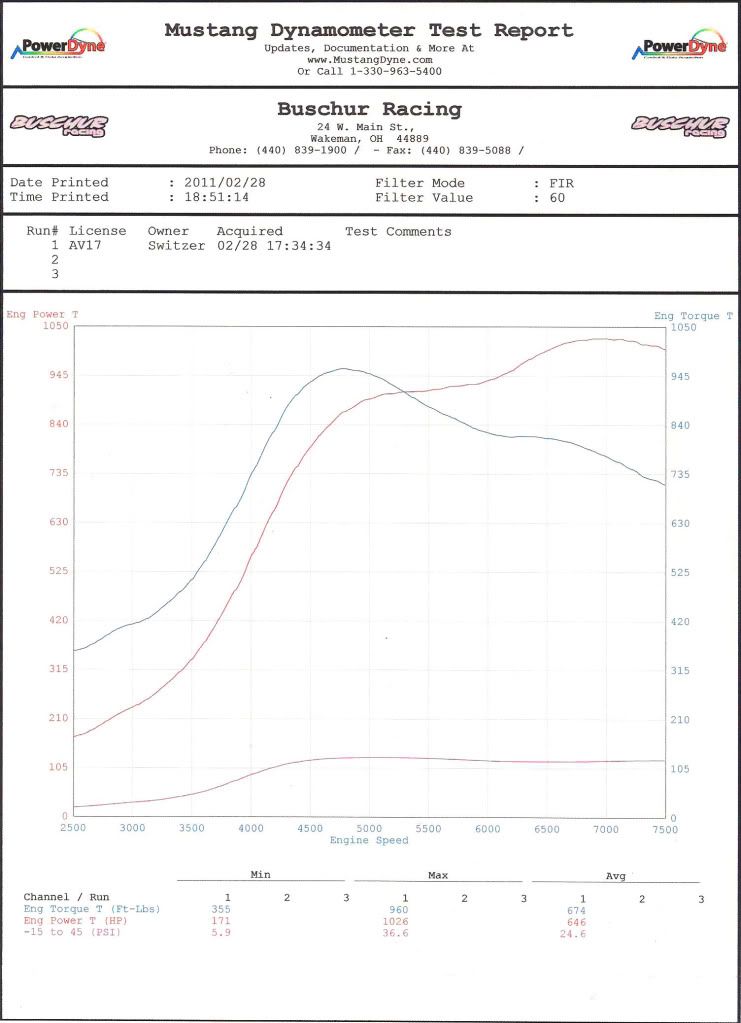
For a limited time only, Switzer Performance is offering a P800-to-R1K upgrade program that will transform your GTR from the potent 800HP street machine it is now into a lethal 1000HP street WEAPON!

P800 Dyno Chart
R1K Dyno Chart

The price? SPI is crediting full retail for your existing P800 components toward the purchase of the R1K package. Even better than that, SPI will pay for the enclosed transport of your GTR to their facility in Ohio as well as the delivery to you when it is finished if you are located in the continental US. Alternate fuel tuning is available as well. Contact Switzer Performance Innovation for more information.

Sep 15, 2011

P800 Porsche 997TT Build at Switzer Performance Pt. 1

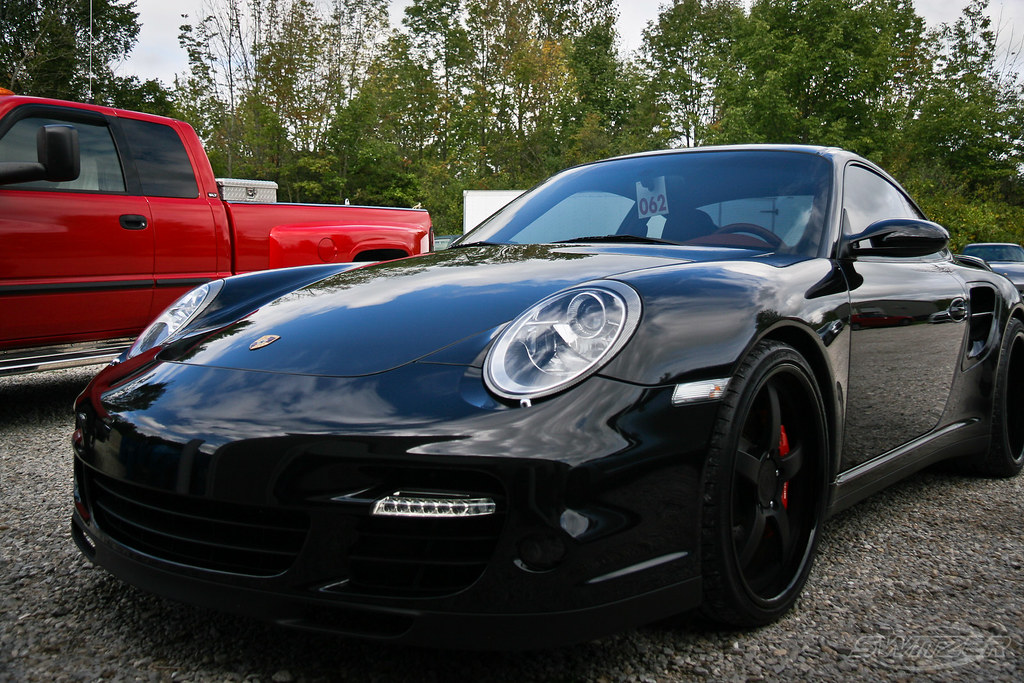
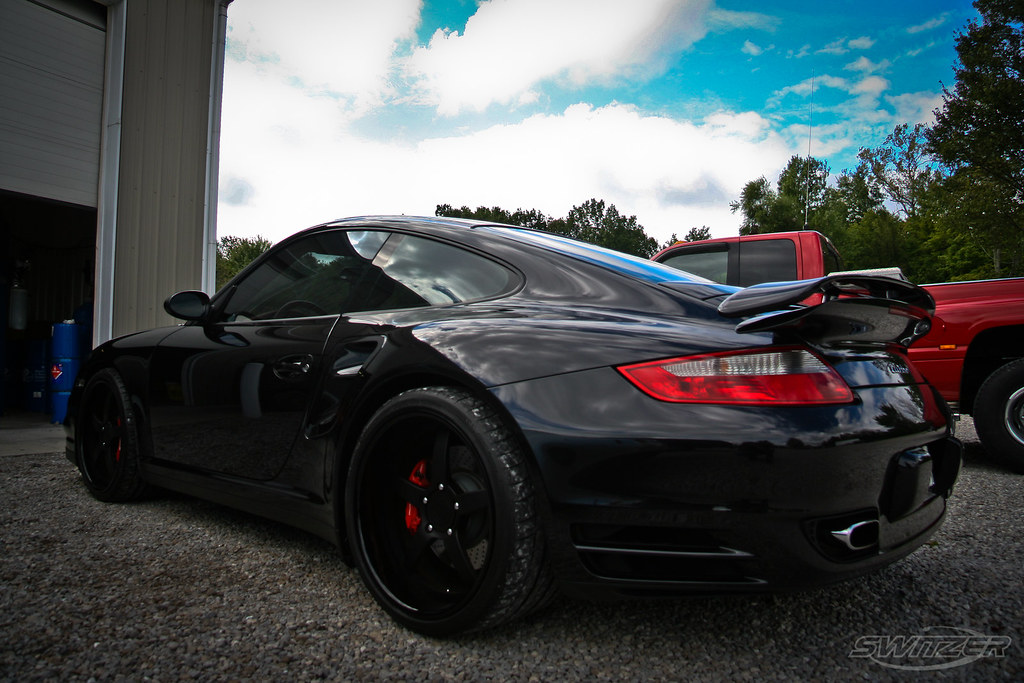
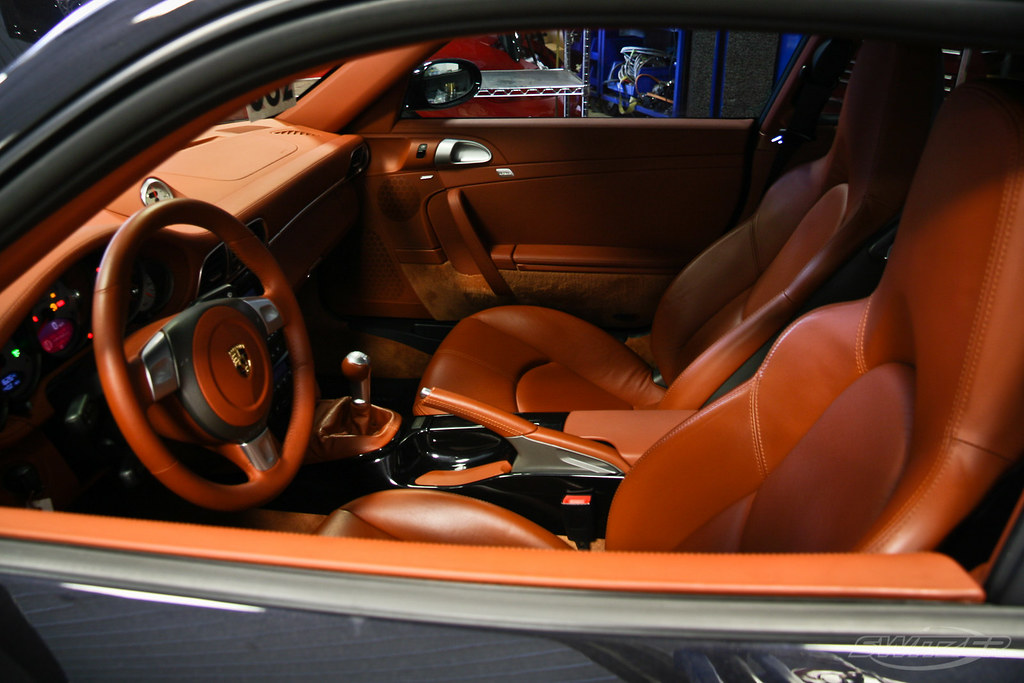
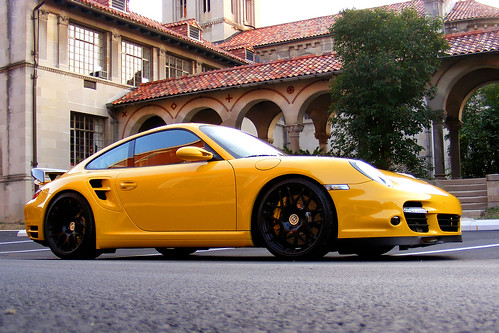
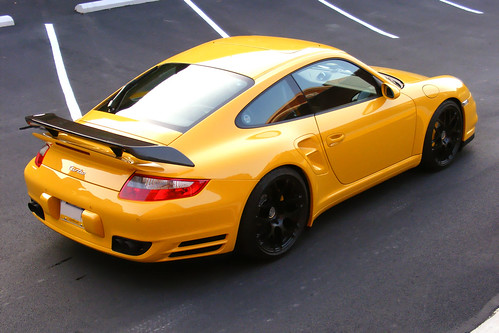
Check out this beauty we checked in last week:


In for our potent P800 package, these tires are due for a rude awakening as 700whp pounds them into the pavement:

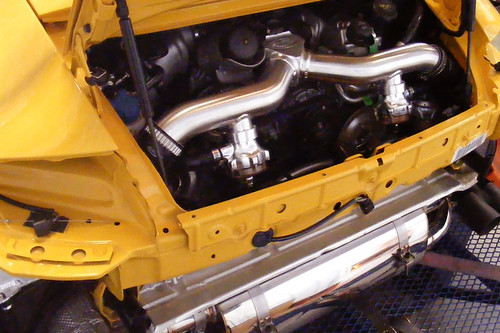
After check-in is finished, it is over to the rack for tear down. At this stage, the car is hooked up to our battery charger and tuning PC so we can download the stock file from the DME using a Softronic OBDII interface cable. 


The official build sheet starts as our P800 PKG:

P800 PKG
700 WHP PUMP GAS PKG

Delivering 700 whp and a super-smooth curve, the Switzer P800 997 TT Porsche offers a real "Jekyll and Hyde" duality of smooth cruising and easy driving around-town, followed up by Veyron-baiting performance when the nanny-controls are off and the pedals hit the metals. This is the ultimate daily-driven track star.
    • SWITZER TURBO-BACK EXHAUST
    • SWITZER COMPETITION-STYLE HEADERS
    • SWITZER ECU SOFTWARE
    • SWITZER HIGH-FLOW INTAKE ASSEMBLY
    • IRIDIUM PERFORMANCE PLUGS
    • SWITZER HIGH-FLOW FUEL INJECTOR SYSTEM
    • FUEL SYSTEM UPGRADE
    • SWITZER SILICONE HOSE KIT
    • TiAL BILLET BOVS
    • SWITZER-MODIFIED GT28 ALPHA TURBOS
    • HD WASTEGATE ACTUATORS
    • SWITZER MONSTER INTERCOOLER SYSTEM
    • SWITZER BILLET ALUMINUM INTAKE PLUMBING
    • ELECTRONIC BOOST CONTROLLER

26990 USD


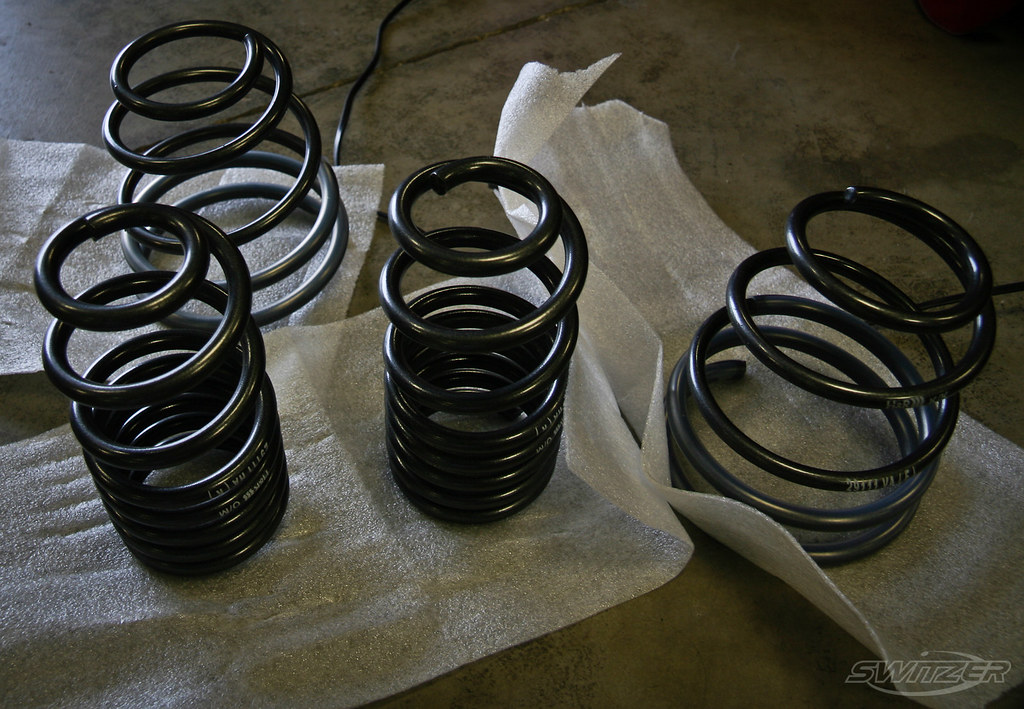
From there, we add our stage 1 clutch upgrade to handle 800HP. Also on the list of modifications is a set of H&R lowering springs to clean up the wheel gap.


Stay tuned for updates as this build progresses. For more information on the P800 and other 997TT performance upgrades, contact Switzer Performance today!

Jul 21, 2010

The DSG Interview


SWITZER GTR OR PORSCHE GT2 ... TOO CLOSE TO CALL


Recently, DSG blogger Eran Dahan interviewed me for an article he was doing for Switzer Performance and Switzer Canada. I've posted part of it here, but you can check out the rest of the interview by clicking here.

Enjoy!


    A while back, I mentioned that at sometime, I'd have the chance to interview the power experts at Switzer Performance. Well today was that day, we got to have a chat with tuning firm synonimous with insanely powerful cars. Thanks to Tym Switzer and his team, the company has consistently released kick-ass cars like the Nissan GT-R P700 and the Porsche 997 P800 through the use of innovation. I bet you'd like to get to know these guys now right? Well here it is, our interview with Switzer Performance Innovation!

    DSG Performance: So let’s start with your story. How and when did Switzer come to be?

    Jo Borras: In the early 90's, Tym Switzer began working on DSM turbos through a Chrysler dealership in Ohio where he was a technician. He studied the way the turbos worked and began tuning his own car after work, which led him to transition form the dealership/service side of the industry and into the racing/tuning side. That first car, a white turbo Talon, was eventually featured in "Turbo and High-tech Performance" magazine in the US.

    DSG: What was the first car you put the Switzer touch on?

    JB: As above, Tym's own 1991 Eagle Talon (DSM).

    DSG: What project car signified a turning point in transforming the Switzer brand into what we all see today?

    JB: One of Tym's Mitsubishi Evo clients had a Porsche with a "built" motor from another tuning firm. They had had the car for over a year, it had been sent back and forth across the US, and it wasn't right. The client asked Tym to take a look at the car, even though Porsche wasn't Tym's specialty. Tym found the problem that day: one of the technicians at "brand x motorsports" had left a socket in the engine case, which was destroying the engine. The client asked Tym to rebuild the engine, and it ran STRONG, which led to other clients of "brand x" hearing about the car and sending their own cars to Tym. Eventually, Tym began addressing not only build-quality issues, but design issues, which led to developing the Switzer MONSTER intercoolers and, eventually, entire comprehensive packages.


CLICK HERE for the rest of the interview on DSG's news blog.

Mar 17, 2010

Video | Switzer P800 997 TT Tiptronic Porsche


MASSIVE 997 TT PERFORMANCE


For a $100 video camera, that's not bad!

Neil Switzer filmed his brother Tym running a Tiptronic-equipped P800 997 Porsche Turbo all the way up to 180 mph on the Switzer Performance dyno, then added some text and fade-effects for us ... and the end result looks great!

I think we found something else for Neil to do - while we put him to work, enjoy the video!

Oct 30, 2009

Exploring The Limits


Porsche's 911 Turbo engines have been attracting high-performance tuners for decades, each one pushing the limits of engine performance further and further into the high-horsepower stratosphere. In the past, elite tuning firms like Ruf and TechArt were forced to replace dozens of internal engine components with bespoke, strengthened parts to handle the loads that 600+ horsepower put on them. All that changed, however, with the introduction of the 997 model Porsche Turbos in 2006.

“The 997 engine is really an incredible piece of engineering,” says Tym Switzer, who has spent the last few years exploring the limits of the 997 Turbo engine, inside and out. “When we set out to develop more horsepower with the 997 Porsche, we approached it the same way we approach any new platform: we analyze the factory components and the way they were designed to handles stress loads to establish an upper limit of what the engine is capable of. When I first looked into the 997 engine, I was very impressed with the quality of the entire assembly.”

What Switzer saw in the 997's engine was the result a no-holds-barred engineering program that culminated in Porsche's 964/GT1 racecar – a turbocharged monster that developed staggering horsepower with enough ruggedness and reliability built in to stand up to the punishing abuse of 24-hour endurance racing. As such, the 997 Turbo engine ships from the factory with many of the components necessary for making big horsepower already in place. “It's like they took a checklist from the page of every tuner out there that was rebuilding these engines, and decided to just put all that stuff in at the factory. Forged connecting rods? Check. Reinforced crankshaft? Check. Dry-sump oil system? Check. It's all there. In fact, just about every component in the 997 was over-built. Inside, it looks more like one of the cutting edge import race engines we were building in the 90's than it did any kind of street engine.”

With a high degree of confidence in the 997 Turbo engine's internals, Switzer moved to develop a line of bolt-on power-builders that would take advantage of the car's strengths, while addressing some of the limiting factors. “The turbos and intercoolers had to be upgraded to produce the the airflow and efficiencies we needed to reach our objectives. That was a given. Working with our technology partners, we were able to come to market with new upgrade turbo solutions. We also worked diligently to develop our own 'MONSTER' intercoolers and intake plumbing. I think our overall upgrade strategy compliments the overbuilt nature of the 997 perfectly.”

Switzer's tuning program eventually led to the firm's L4 PKG, which delivers over 700 horsepower on 93 octane gasoline with upgraded versions of Porsche's excellent factory VTG turbos – all while remaining emissions compliant. “You could never do something like this ten years ago on stock internals,” he explains. “The older air-cooled Porsche engines just couldn't handle that kind of power without a fully substantially reinforced engine.”

Eventually, though, Switzer's customers wanted more than 700 or 800 hp. “Too much is never enough for some clients,” offers Tym, “so in order to develop a solid engine program for these more ambitious projects, it was essential to see just how much power some of these stock components could stand up to, when tuned properly. We then spoke to a few of our more adventurous clients and decided to see exactly where the limits of the 997 really are.”

Last fall, Switzer and his crew reached 850 all-wheel horsepower (approx. 1000 crank hp) with their SLEDGEHAMMER project car. That prodigious power output and the car's standard all-wheel-drive traction delivered enough performance for repeated 9.7-second quarter-mile runs at over 145 mph with 60-130 times in the 4's – performance that falls well into “Superbike” territory.

This week, one year on, Switzer's SLEDGEHAMMER is still pulling strong, serving as the company's 997 development mule and astonishing everyone with its engine's longevity and durability. “Everyone who has been in this industry for a number of years is surprised by these cars,” says Tym. “Really, though, there's no surprises here. When we reached 700 hp a year and a half ago, we were told the engines were time-bombs. Dozens of customer cars and literally thousands of road - and track! - miles later, the cars are still running strong. The P800 kit we introduced earlier this year proved that the limit wasn't anywhere near 700 hp, and earlier this week, the original SLEDGEHAMMER came back to the shop and did back-to-back dyno pulls at 915 horsepower with nearly 800 lb-ft of torque. We've made some minor updates to the fuel system and standalone engine management system, but that's still 50 hp and almost 100 lb-ft more than the car's best numbers a year ago, and it's still holding together. As expected. I think, more than anything, these huge power levels serve to show just how good the Porsche 997 Turbo is from the factory. As a tuner, you couldn't ask for a better, stronger foundation. The real challenge has been to make the most of what's already there.”


So, what's next for the 997-engined SLEDGEHAMMER? A good deal more abuse! “We're going to run a few more experiments with this development car. There are still a few questions I have that I would like to answer for future product development. There is still an enormous amount of potential in the 997, and we're all curious to see how far this particular rabbit holes goes!”

Aug 3, 2009

The Beauty of All-Wheel-Drive


When Tym Switzer and his crew at Ohio-based Switzer Performance introduced their 800 hp P800 package for Porsche's track-focused GT2 back in June, a number of inquiries expressed significant interest in the package, but the GT2 was raw and fast, and a number of customers asked if they could get the same level of power from the more controllable AWD 997TT.

Switzer's answer was a resounding "Yes!", which brings us to the car pictured here - an 800 hp, all-wheel drive "Yes!" that takes advantage of the 997's superior traction and shorter gearing to deliver staggering acceleration figures. Think sub 3-second 0-60 runs and 1/4 mile times consistently under 10.5, and you start to get the idea: this car is a monster.

"The P800 kit for the GT2 evolved from the SLEDGEHAMMER project car that ran in the 9's last year," offers Tym, "that was a race-gas package, but as the program developed, we were able to move to a more streetable package and keep the factory DME, unlike the SLEDGEHAMMER, which used a stand-alone system. Other than that, everything that made the SLEDGEHAMMER so special is still right there in the P800 GT2, and it's still right there in this 997."


Switzer's P800 997 package apes their GT2 package's use of custom GT30 turbochargers with custom billet compressor wheels on ball-bearing center sections in lightweight stainless housings, the heat generated by the turbocharged six is still dissipated by Switzer's own MONSTER intercoolers, and Switzer's own DME calibrations still keep everything copacetic. Unlike the GT2, however, the 997TT-based P800 does not require a new intake manifold or upgraded throttle-body. Switzer explains, "Porsche developed a model-specific intake manifold for the GT2, which worked perfectly with the stock VTGs, but didn't flow enough for the GT30Rs. The 997TT just doesn't have that problem, which is great because it's easier to install, and saves the customer some money, too."


Switzer's 800 hp P800 package for the 997TT includes Switzer's competition-style exhaust and headers, an upgraded carbon clutch package, electronic boost control, and the previously mentioned GT30R turbos, MONSTER intercoolers, and ECU software.

The 997TT L5 package is available now through Switzer Performance dealers. Contact Switzer dealers for more.

Jun 5, 2009

GT2 Porsche Tuning PKGs up to 800 HP


2009 has been a busy year for us here at Switzer Performance. In January, our thousand-horsepower, 9-second SLEDGEHAMMER project car introduced the world to Tym's Oberlin, Ohio-based tuning house, and we followed up that debut act in February when a number of our customer cars ran 10 second 1/4 miles in 700 hp fully-automatic 997 turbo Porsches. March saw the introduction of our Nissan R35 GTR performance upgrades, good for up to 800 hp on 93 octane pump gas.

This week, Tym Switzer is introducing his latest customer-ready performance packages for Porsche's outstanding 997 GT2. The new GT2 packages range from a simple software revision to Switzer's comprehensive flagship offering: the $39,000, 800 hp GT2 PKG shown (installed) in these pictures. "This 800 horsepower pump-gas package has evolved from those first SLEDGEHAMMER builds," explains Tym, "but unlike the SLEDGEHAMMER, which used a stand-alone system, we've been able to keep the factory DME, making this a true bolt-on package. Everything else that went into the SLEDGEHAMMER builds is in this package, running on pump 93."


Switzer's 800 hp GT2 package makes use of custom Garret GT30R-based turbochargers with custom billet compressor wheels on ball-bearing center sections in lightweight stainless turbine housings. Switzer's upgraded turbos compress massive amounts of air, while generating heat than the stock units - heat which is channeled to the engine through Switzer's own MONSTER intercoolers. The engine itself is fed air and fuel through larger injectors and a custom intake plenum with an oversized throttle-body. All this hardware is managed by the stock ECU, running Switzer-specific DME software calibrations. Perhaps the most controversial part of Switzer's package, however, is the exhaust system. Switzer's GT2 exhales through a GT2-specific version of the company's existing 997 TT exhaust. "As much as we would have liked to stick with the GT2's titanium canister, there was just no way to hit our power goal on pump gas with the stock system. It was just too restrictive and not designed to handle this much airflow."


Switzer's stated goal for the GT2 project was 800 crank horsepower on 93 octane pump gas with an efficient, linear power curve that efficiently put power to the ground and didn't punish the driver with sudden spikes in torque and power. One look at the final dyno results (see video, above - about a minute in) reveals those goals have been met. "We were very happy to hit our target numbers, of course, but the best part is that the car is still so manageable on the street, at this power level. It is an everyday hyper-performing exotic, and I can't wait to get it out on the track and see how it performs in the hands of a really talented driver."

The Switzer Performance 800 hp GT2 Porsche package is available now through Switzer Performance dealers. CLICK HERE for more.

Apr 14, 2009

Jalopnik Drives the P800


A few weeks ago, we invited a few journalists to come out to Beaverun and sample some of our tuned Nissan R35 GTRs.

Andy Didorosi, of Jalopnik, is the first to publish his on-track driving impressions of our P800 package, along with a fantastic (if snowy) 25-image high-resolution gallery.

CLICK HERE to check out the original gallery.

Enjoy!


Feb 26, 2009

Switzer Performance Tunes the R35 GTR


Although we have been strongly focused on our Porsche development for the last couple of years, we recently took on an interesting project for a client of ours. The new Nissan R35 GTR. Having been tuning and modifying multivalve turbocharged engines now for many years, I have been involved in many projects spanning many platforms. One car that I have always been a fan of has been the Nissan Skyline. When we were approached about what we could do to enhance the GTR I was reluctant to get involved at first. However there was an interest in the back of my mind to see what we could do with the platform.

After doing some initial research to get familiar with the newest platform, I was impressed with Nissan's application of certain technologies. One thing I was not impressed with was the amount of "fluff" parts I was seeing being distributed for the cars or the banzai-crank-the-boost with racegas tuning tactics that I was seeing. I knew that it was important to take a look at what the car was actually capable of and what was really going on within the platform as we tried to push it beyond factory performance limits. One thing that I have come to realize at this point after many dyno pulls and recalibrations for different hardware... Many of the cars out there are running on the very edge of their durability and their longevity will certainly be tested. The Nissan ECU is very dynamic in its control strategies and this is absolutely the only reason many of the modified GTR's out there are staying together (for now).

During the development of this GTR, we have done an enormous amount of data aquisition and testing. We were able to see the deficiencies of certain factory components and confirm the outstanding performance of others. I am steadfast in my stubborness in regard to not adding any component to a project that doesn't contribute to the end goal. Rather than just throwing parts at a given project to achieve a result, it's important to know why you are changing them.

Since our client was looking to road race his car heavily (yet wanted the ability and convenience of not having to find race gas all of the time to enjoy the car), I wanted to lay out a combination that would make around 700hp at the crank without stressing the engine or transmission. I also wanted the car to be ultra consistent. What good is 700hp if you can only use it once before you have to let the car cool completely down to get the same performance? Dyno Queen? No thank you. I don't race dyno sheets.

In order to generate this kind of performance reliably and consistently, it is imperative that you increase the efficiency of the combination. It was my personal opinion that to run the stock intercooling and turbochargers much beyond factory levels was pushing those components into areas of inefficiency that would eventually become counter productive to our efforts from a durability and performance standpoint. Data analysis from testing easily confirmed this.

Working with our development partners, we have been able to put together a combination with the finest turbocharger technology currently available. These new turbochargers utilize Garrett GT ball-bearing center sections and custom compressor wheels with the most applicable aero profile for this combination. These turbos not only produce the airflow needed to meet our performance targets, they also offer the best intial and transient boost response as well. This is hugely important for road course and street use. Along with the intercooler and plumbing package we have developed, this combination has the best thermal capacity we have produced on a platform to date. Our pressure drop through the entire system was less than .05 psi... virtually no pressure drop. While the cores can flow up to 1057hp worth of air, we are experiencing no loss in response from the combination. During our 4th gear runs on the dyno, our charge air temps would rise only 1 degree F max. Now that's efficiency!

The other key to success of this project has been in regard to tuning. Tuning is everything to a performance project like this. It is the key component to pulling everything together in order to achieve the desired result. We have been working with Cobb Tuning's Pro Tuner software with the GTR. As I prefer to do all of my own tuning on the packages we develop, ecu programming was essential to the success of the project... especially since we had to deal with huge increases in airflow which the standard calibrations are not compatible with.

At any rate, we've just completed our first round of testing on the new package and we were able to exceed our initial goals and projections along the way. Here's a quick video link showing our progress so far...


I am very happy so far with the performance, although we still have fine tuning to do. The transient response is outstanding and the driveability is that of a stock GTR at this point. I am looking forward to some road tuning and track time with the car in the very near future... we just need this damn snow to melt!

If you made it this far - thanks for reading!

Jan 5, 2009

New Year, New Site


Welcome to Switzer Performance Innovation's brand-spanking-new blog! This is THE place to read up on all the latest projects and products from your favorite Porsche tuner: SPI, makers of the fastest, most powerful bolt-on prepared Porsches in the world.

With your comments, YOU can help drive the development of new products at SPI and interact with me and Tym directly - sSo feel free to look around the new site, visit our media pages, and shop our online stores (coming soon).

Thanks for visiting, come back often and ENJOY THE SHOW!