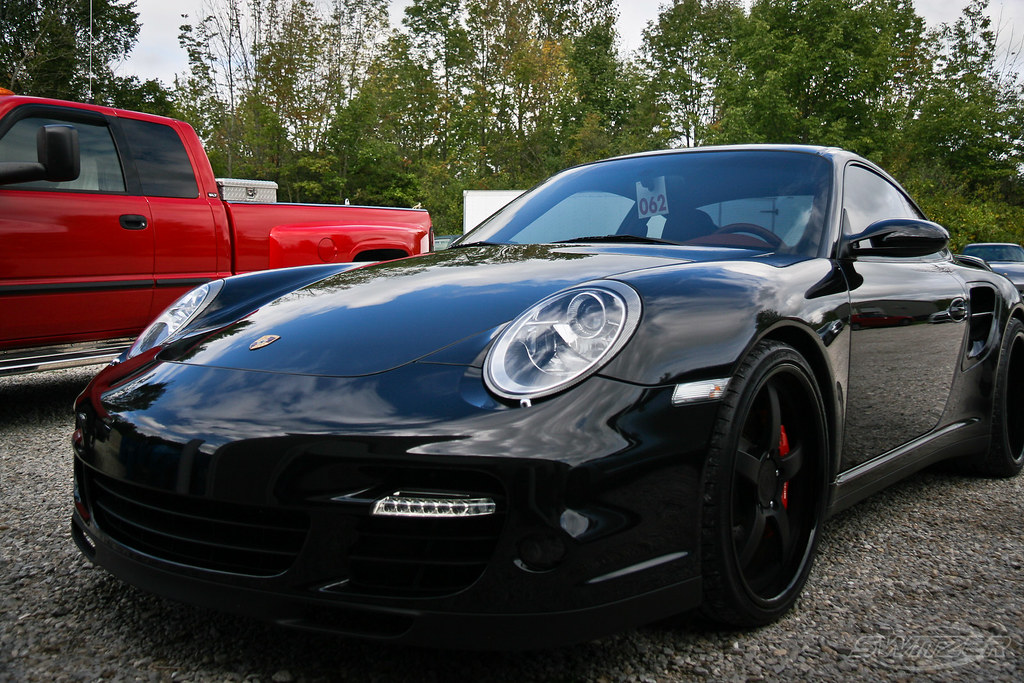
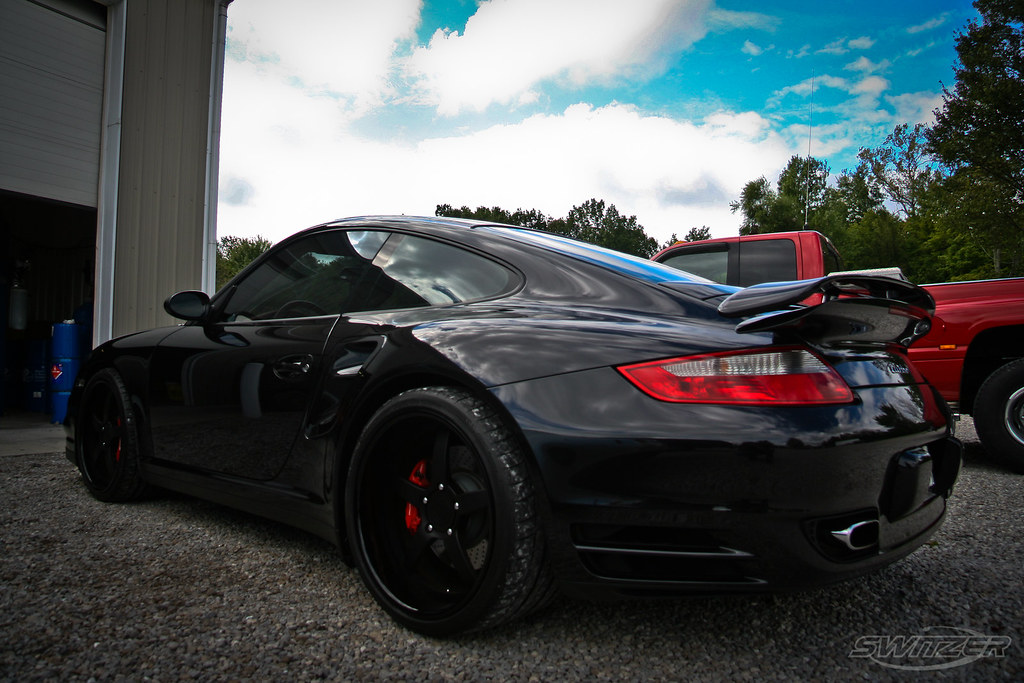
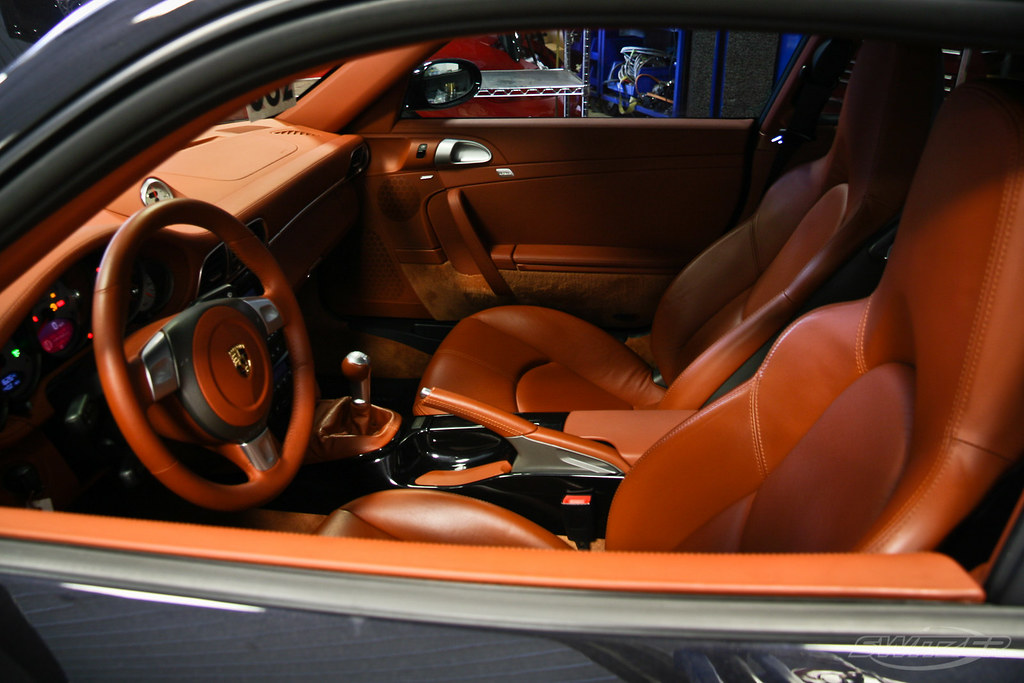
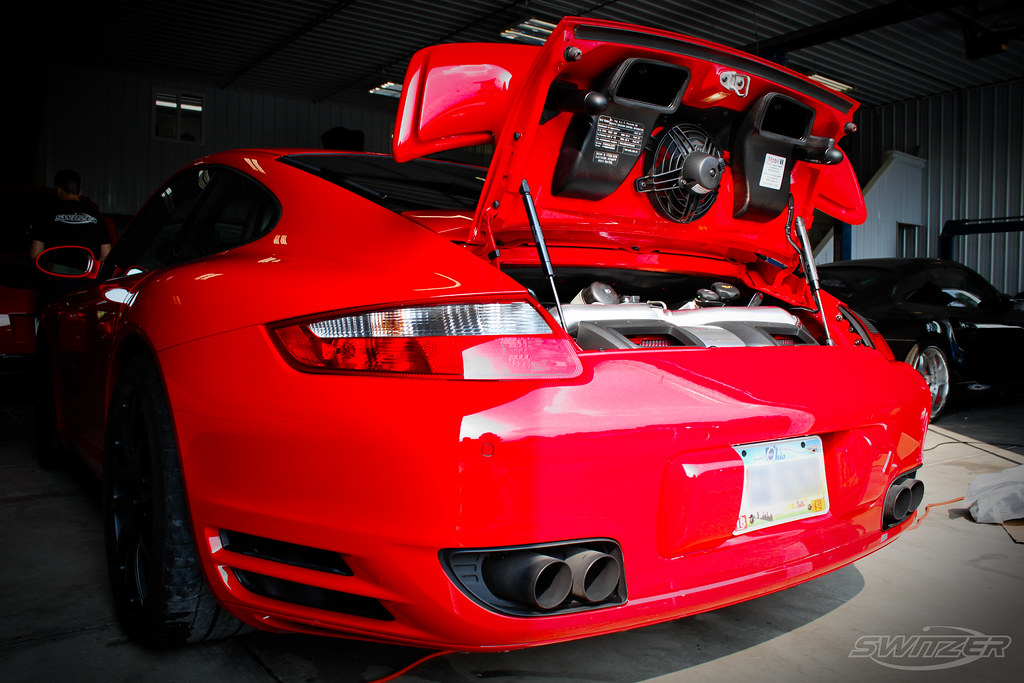
In for our potent P800 package, these tires are due for a rude awakening as 700whp pounds them into the pavement:
After check-in is finished, it is over to the rack for tear down. At this stage, the car is hooked up to our battery charger and tuning PC so we can download the stock file from the DME using a Softronic OBDII interface cable.
The official build sheet starts as our P800 PKG:
P800 PKG 700 WHP PUMP GAS PKG
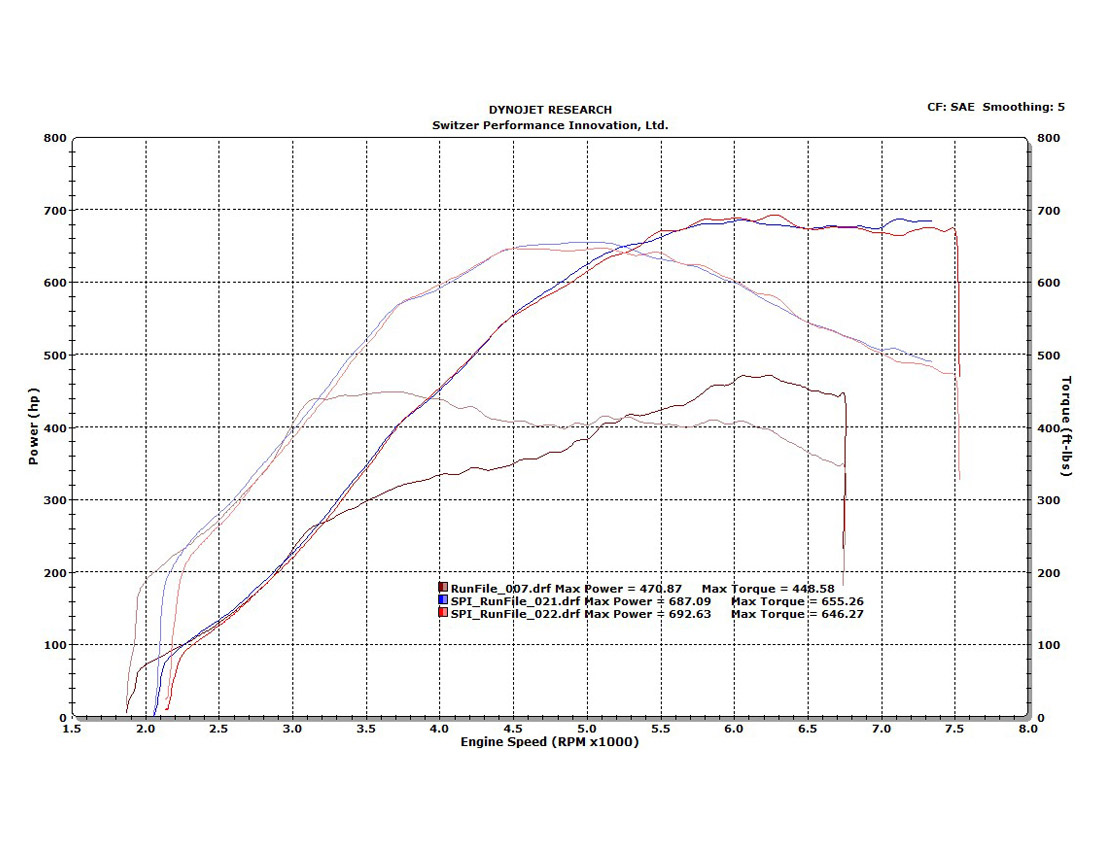
Delivering 700 whp and a super-smooth curve, the Switzer P800 997 TT
Porsche offers a real "Jekyll and Hyde" duality of smooth cruising and
easy driving around-town, followed up by Veyron-baiting performance when
the nanny-controls are off and the pedals hit the metals. This is the
ultimate daily-driven track star.
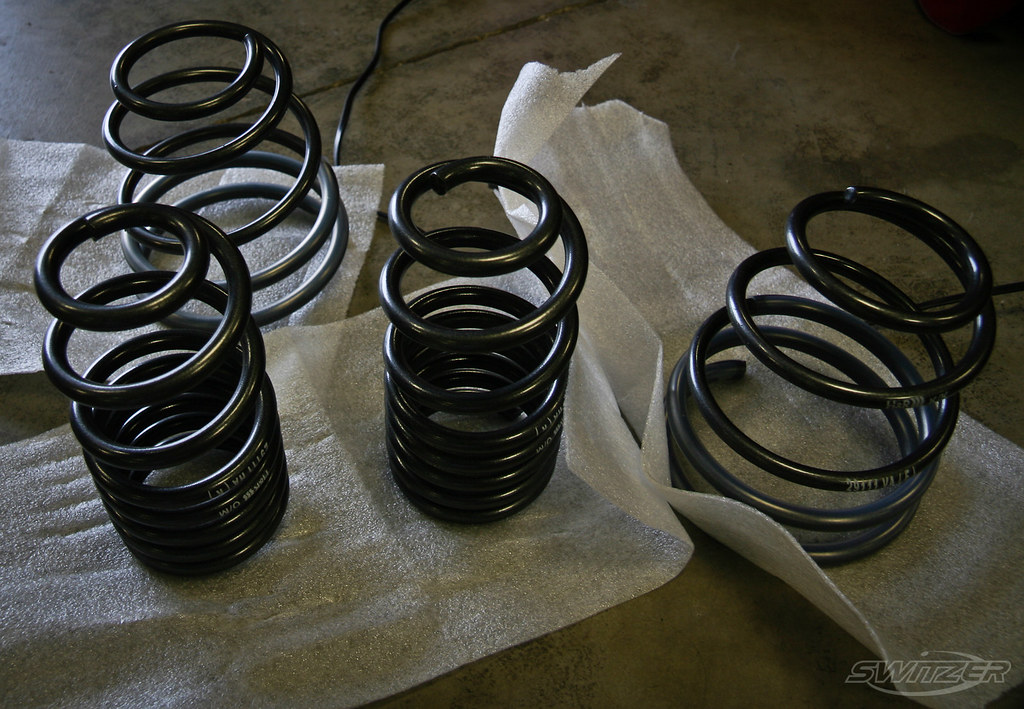
From there, we add our stage 1 clutch upgrade to handle 800HP. Also on the list of modifications is a set of H&R lowering springs to clean up the wheel gap.
Stay tuned for updates as this build progresses. For more information on the P800 and other 997TT performance upgrades, contact Switzer Performance today!
Yes, that is correct, 700HP, and on 93 octane no-less! While it may not seem that impressive compared to our more powerful offerings such as the P800, R911, or our special order builds, with this package starting at $17990 you get incredible "bang" for your proverbial "buck." How much bang is that exactly? Enough to propel the 997TT into Veyron territory with a 2.5 0-60 and 0-100mph in 5.9 seconds!
VBox Verified Performance
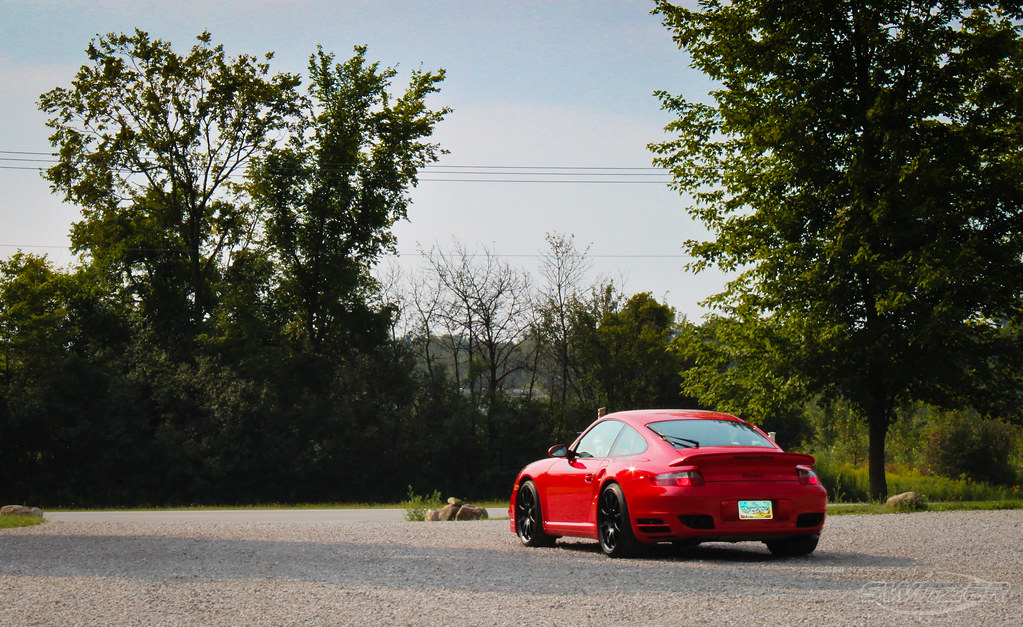
Enjoy the photos below of the our most recent P700 997TT heading home:
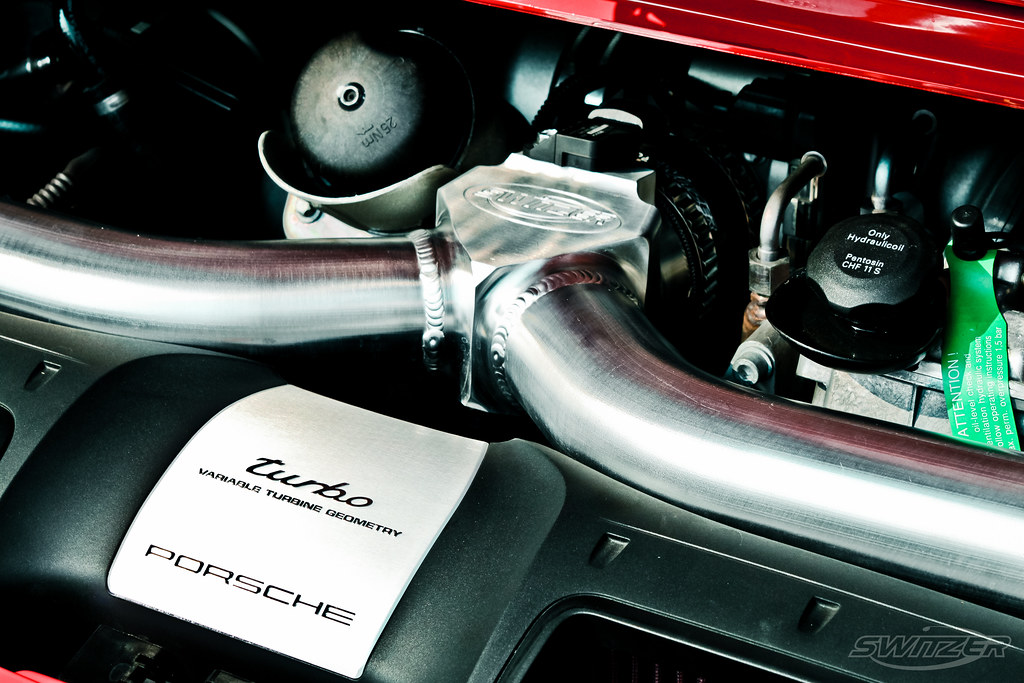
Switzer Billet Upper Intake plumbing from our MONSTER IC's
Switzer Signature Series Wheels in Satin BlackEnjoy!
PORSCHE 997.2 TT MEETS SLEDGEHAMMER Since it hit the ground running 9-second quarter miles back in 2008, the 997 TT-based Switzer SLEDGEHAMMER has been making big waves on the online forums. Recently, however, Porsche introduced a new "997.2" version of the TT, featuring a new engine, new turbos, and a new dual-clutch "PDK" transmission.
Porsche's new 997.2 TT has been covered elsewhere, and our initial driving impressions mirror those of most testers: the PDK is slick, and the car is reasonably quick fresh out of the box. Of more interest to you, I'm sure, is that we'll be using this white-over-red ("cocaine-over-cherries") TT as our in-house development car for a new range of 997.2 tuning programs.
SWITZER P800 PORSCHE 997s AT YAS MARINA Top Performance is the MidEast's leading automotive magazine, and they have just released images of next month's cover cars ... a pair of Switzer-tuned 997 Porsches at Yas Marina circuit!
Look at this photo - that track is GORGEOUS! SWITZER R911 GT2 / P700 997 TT CAB We couldn't be more excited, and want to thank everyone involved for their help in making it happen. Visiting the Middle East last month was a humbling experience, and we met a lot of amazing and talented people.
Thanks, to everyone who made this happen. We hope to see you again soon.
SWITZER P700/R750 VTG KIT | MOSCOW The latest Porsche 911 's variable-vane turbochargers (VTG) are marvels of modern performance engineering that allow the 911's relatively small 6-cylinder “boxer” engine to deliver incredible horsepower, and help keep Porsche's flagship competitive with supercars boasting 10, 12, or even 16 cylinder engines. Even with nearly 500 hp from the factory, however, Porsche turbo owners still want more – more power, more speed, more everything. These performance enthusiasts demand superior performance, and have lofty expectations.
In order to meet those clients' lofty horsepower goals, it is necessary to increase the flow of air into the Porsche's engine – and since the primary function of any turbocharger is precisely to force air into an engine, upgrading the factory-provided VTG turbochargers is a logical step in the process of building additional power ... but Porsche clients don't want to sacrifice reliability to have more power.
This is the real problem faced by the modern tuner: clients want more performance, without more trips to the garage.
In order to provide a thrilling experience that is reliable enough to thrill time and time again, day or night, Monday through Sunday, we here at Switzer Performance have to deliver a package that is simply better than what the factory offers. We need an exhaust that flows more air. Intercoolers that remove more heat. We need turbos that are more efficient – that compress more air, and make less heat than the stock Porsche turbos.
How did we do it? By working closely with some of the industry's leading engineering firms and OE suppliers.
Switzer Performance' close relationships with our development partners allow us to produce larger-than-stock compressor wheels with unique aero profiles specifically designed to achieve the airflow rates required for our P650/R680 and P700/R750 Porsche tuning packages. The new wheels are 11% larger than stock, and allow the Switzer turbos to move more air than the factory Porsche turbos, while generating less heat. MORE AIR + LESS HEAT = MORE POWER + LESS MAINTENANCE The Switzer VTGs have other competitive advantages, as well – all due to Switzer's unique ability to specify exactly the component characteristics required to meet our needs, as determined by our clients.
All of this is made possible through the incredible advances in engineering and design software, and lessons learned from decades of aggressive aftermarket turbocharger development. These are lessons that have taught us to build both power and reliability into a given system, and given us the ability to deliver cutting-edge performance upgrades that meet or exceed OEM-levels of component fit, finish, and quality.
“Quality” is a word we take very seriously. On that note, I'd like to point out that every VTG turbocharger Switzer upgrades is built to be as solidly reliable as the OEM component it replaces.
When we upgrade these turbochargers, every component is cleaned, refinished, and checked for proper tolerances. Every backing plate and compressor housing is CNC-machined for precise matching to our compressor wheels. We use only brand-new seals and bearings in our cartridges. We individually balance all shaft and wheel assemblies during assembly, then verify the final product with a high-precision cartridge balance, ensuring that there is no self-destructive behavior once the turbos are put into service. These are rebuilt cores, for sure, but they are so thoroughly reconditioned that it wouldn't be too much of a stretch to call them “new”. SWITZER TUNED VTG PORSCHE TURBO Sadly, however, there are number of companies that are trying to sell simple wheel swaps with little or no regard to additional machining and quality-control procedures. They are telling their clients that these steps aren't necessary, swapping in some billet wheel, and calling it a day ... and there are a lot of billet wheel options on the market, being produced with reasonably-priced and readily-available alloys.
That's simply not the case here, as every compressor wheel we use is built with aerospace quality alloys specifically formulated for use in high-performance turbines. 5052 or 6061 aluminum simply will not perform consistently in the brutal, ultra-high temperature world inside a high-performance turbo housing, and even laymen can spot the cheaper wheels after a few heavy duty cycles. Combine objectively inferior alloys with anything less than best-practice machining and assembly programs, and it becomes easy to see why the resulting products tend to self-destruct over time.
Our client's cars are just not something we at Switzer are willing to take a chance on.
We demand and use only the best material technologiess and manufacturing practices; and we work diligently to deliver products that perform better than anything else available anywhere. These VTGs certainly aren't the cheapest turbo upgrades available to Porsche enthusiasts, but they represent the best value for dollar argument in the aftermarket today: the best of everything, at a fair price.
Switzer VTG turbo upgrades are available as direct replacements for the factory VTGs, or as part of our comprehensive tuning solutions for Porsche's 997 TT and GT2. Contact Switzer Performance for more.
SWITZER P800 PKG Porsche developed their variable-vane "VTG" turbo technology to spool more quickly than conventional turbochargers, making their latest 997 Turbo models respond more like the naturally-aspirated V8 and V12 competition from Ferrari, Aston Martin, and others.
"When I first saw the new variable-vane technology the 997 Turbos, I was impressed,” explains Tym Switzer. “The more I looked at the VTGs, though, when we flow-tested them and really started putting them to work, I began to realize that it would feasible to develop a turbocharger package that could match the VTG's responsiveness while out-performing them in the midrange and top end. That we were able to develop this package so quickly is a direct result of the incredible progress in aftermarket turbo technology that has taken place over the last few years. Our technology partners can deliver exactly the turbos we need to achieve the performance targets we specify for a given build - and we work together closely to achieve those targets with more run-after-run consistency than a factory VTG-based turbo can provide." SWITZER P800 PKG w/ GT2-STYLE WING If Tym's name seems familiar, it's because Switzer Performance (the Ohio-based tuning firm that carries his name) has been making big waves in the tuning industry since their clients in Russia, the MidEast, and other world markets began posting videos of their match races all over YouTube last summer.
"We know a bit about making real-world power," adds Tym, "and once we decided to go beyond 700 hp with the efficiencies required for maximum consistency, reliability, and throttle-response, we realized it was time to move away from the VTGs, which are on the living edge at 750 and well beyond their practical, everyday limits."
Common internet wisdom holds that turbocharged engines are exercises in compromise. You can have quick-spooling turbos, and you can have turbos that pull hard to redline, but not both. Switzer's views on the matter? "While incredibly responsive, the VTGs do suffer from some weaknesses when the performance bar is raised significantly." Pointing to torque and horsepower curves that match the factory VTGs in initial spool up, then run away from the VTGs all the way to the P800's new 7500 rpm redline. “With the new P800, you can really have the cake and eat it, too, in a car that you can drive back and forth to the office without drama, and it will still deliver an incredible rush at the track.”
Switzer's new P800 package for the 997 includes Switzer's competition-style exhaust and headers, electronic boost control, Switzer-specific TiAL Alpha turbochargers, MONSTER intercoolers, and an ECU software tune to bring it all together in a package that drives like a stock 997 TT … until the go-pedal hits the floor, that is. ">The great thing about this package is that the power delivery is more linear than with the VTGs, so the P800 car is actually smoother than the factory TT, without any of the oscillation you get periodically from the DME's dynamic control of the vane mechanism on the VTG,” explains Tym. “This is a great example of our tuning philosophy: we're not about peak power, we're about best power."
The P800 package is available now through Switzer Performance dealers. Contact Switzer dealers for more.
WHAT 800 EMISSIONS-COMPLIANT HP LOOKS LIKE Porsche's 996 model was, arguably, the most significant product launch in the company's history, making the flagship 911 a modern car, instead of an air-cooled anachronism.
The 996 was initially shunned by many Porsche purists, but quickly became a favorite tuning platform for tuners. As we mentioned before in these pages, the 996 featured an engine derived from Porsche's cost-no-object GT1 program, which was shelved at the end of the 1990's, and the engine's bullet-proof construction has allowed us to push the stock internals of the 996's successor - the 997 - to incredible power levels, far beyond what was possible with the older air-cooled cars.
A robust platform is just one part of the puzzle, however - rapid advancements in both machining, software, and rapid-prototyping technologies is another, and development partners like TiAL Sport have made the most of these new tools, providing us with state-of-the-art turbine housings that manage airflow and heat more efficiently than even the most advanced racing turbos of just a few years ago ... which got us thinking.
Our primary focus has been on the newer 997 model Porsches (more on those, later), but what if we revisited that platform with current knowledge, using a new turbo based on TiAL's latest Alpha housings (plus a few Switzer tweaks to optimize it for the 996 TT)? What would that car be like?
The results (below), speak for themselves ... SMOOTH AND LINEAR AND NEVER STOPS PULLING ... over 670 whp on 93 octane with 200-cell catalytic converters in place, and a super-smooth curve that gives the car a "Jekyll and Hyde" duality of smooth cruising and easy driving around-town, followed up by Veyron-baiting performance when the nanny-controls are off and the pedals hit the metals.
Considering the current market prices for 996 turbos, Tym feels a car like this delivers the ultimate daily driver/weekend track-day experience by offering a reliable driveline, capable suspension, and excellent braking with the stability and confidence of AWD. He says it best himself,
"This is an 800 hp pump-gas Porsche that can be driven to the track, run hard all day, and driven home. In short: I couldn't be happier with the results, and - most importantly - neither can our clients."
Pricing for this new "P800" 996 TT PKG starts at 18990 USD for Tiptronic Porsche 996 TT, and replaces our existing PREMIUM POWER 996 packages. These prices reflect the same "best bang-for-the-buck" philosophy as our BEST VALUE POWER packages, which start at $3995.
Porsche's 911 Turbo engines have been attracting high-performance tuners for decades, each one pushing the limits of engine performance further and further into the high-horsepower stratosphere. In the past, elite tuning firms like Ruf and TechArt were forced to replace dozens of internal engine components with bespoke, strengthened parts to handle the loads that 600+ horsepower put on them. All that changed, however, with the introduction of the 997 model Porsche Turbos in 2006.
“The 997 engine is really an incredible piece of engineering,” says Tym Switzer, who has spent the last few years exploring the limits of the 997 Turbo engine, inside and out. “When we set out to develop more horsepower with the 997 Porsche, we approached it the same way we approach any new platform: we analyze the factory components and the way they were designed to handles stress loads to establish an upper limit of what the engine is capable of. When I first looked into the 997 engine, I was very impressed with the quality of the entire assembly.”
What Switzer saw in the 997's engine was the result a no-holds-barred engineering program that culminated in Porsche's 964/GT1 racecar – a turbocharged monster that developed staggering horsepower with enough ruggedness and reliability built in to stand up to the punishing abuse of 24-hour endurance racing. As such, the 997 Turbo engine ships from the factory with many of the components necessary for making big horsepower already in place. “It's like they took a checklist from the page of every tuner out there that was rebuilding these engines, and decided to just put all that stuff in at the factory. Forged connecting rods? Check. Reinforced crankshaft? Check. Dry-sump oil system? Check. It's all there. In fact, just about every component in the 997 was over-built. Inside, it looks more like one of the cutting edge import race engines we were building in the 90's than it did any kind of street engine.”
With a high degree of confidence in the 997 Turbo engine's internals, Switzer moved to develop a line of bolt-on power-builders that would take advantage of the car's strengths, while addressing some of the limiting factors. “The turbos and intercoolers had to be upgraded to produce the the airflow and efficiencies we needed to reach our objectives. That was a given. Working with our technology partners, we were able to come to market with new upgrade turbo solutions. We also worked diligently to develop our own 'MONSTER' intercoolers and intake plumbing. I think our overall upgrade strategy compliments the overbuilt nature of the 997 perfectly.”
Switzer's tuning program eventually led to the firm's L4 PKG, which delivers over 700 horsepower on 93 octane gasoline with upgraded versions of Porsche's excellent factory VTG turbos – all while remaining emissions compliant. “You could never do something like this ten years ago on stock internals,” he explains. “The older air-cooled Porsche engines just couldn't handle that kind of power without a fully substantially reinforced engine.”
Eventually, though, Switzer's customers wanted more than 700 or 800 hp. “Too much is never enough for some clients,” offers Tym, “so in order to develop a solid engine program for these more ambitious projects, it was essential to see just how much power some of these stock components could stand up to, when tuned properly. We then spoke to a few of our more adventurous clients and decided to see exactly where the limits of the 997 really are.”
Last fall, Switzer and his crew reached 850 all-wheel horsepower (approx. 1000 crank hp) with their SLEDGEHAMMER project car. That prodigious power output and the car's standard all-wheel-drive traction delivered enough performance for repeated 9.7-second quarter-mile runs at over 145 mph with 60-130 times in the 4's – performance that falls well into “Superbike” territory.
This week, one year on, Switzer's SLEDGEHAMMER is still pulling strong, serving as the company's 997 development mule and astonishing everyone with its engine's longevity and durability. “Everyone who has been in this industry for a number of years is surprised by these cars,” says Tym. “Really, though, there's no surprises here. When we reached 700 hp a year and a half ago, we were told the engines were time-bombs. Dozens of customer cars and literally thousands of road - and track! - miles later, the cars are still running strong. The P800 kit we introduced earlier this year proved that the limit wasn't anywhere near 700 hp, and earlier this week, the original SLEDGEHAMMER came back to the shop and did back-to-back dyno pulls at 915 horsepower with nearly 800 lb-ft of torque. We've made some minor updates to the fuel system and standalone engine management system, but that's still 50 hp and almost 100 lb-ft more than the car's best numbers a year ago, and it's still holding together. As expected. I think, more than anything, these huge power levels serve to show just how good the Porsche 997 Turbo is from the factory. As a tuner, you couldn't ask for a better, stronger foundation. The real challenge has been to make the most of what's already there.” So, what's next for the 997-engined SLEDGEHAMMER? A good deal more abuse! “We're going to run a few more experiments with this development car. There are still a few questions I have that I would like to answer for future product development. There is still an enormous amount of potential in the 997, and we're all curious to see how far this particular rabbit holes goes!”
Last weekend's Moscow Unlimited could have been a commercial for our bolt-on kits, with the top 3 cars running Switzer tuning packages.
The 997 TT that took top honors in the 1/4 mile drags featured our 997 TT L4 PKG and lightweight signature series wheels, while the mile-winning GTR Nissan featured our off-the-shelf P800 plus cooling kit.
We are very proud of our Russian teammates out there - they are great guys, brave guys, crazy guys, and we're proud to have them as customers.
Check out the times, below. Mile: 1.(10) Nissan GTR R35 Switzer P800 (Oleg) - 26.928 seconds.(310.88 km / h) 2. (26) Porsche 911 Switzer SPI 750 (Dmitry) - 26.959 seconds. (307.95 км/ч) (307.95 km / h) 3. (09) Nissan GTR R35 Switzer P800 (Yuri) - 28.005 seconds. (289.38 км/ч) (289.38 km / h) 4. (29) Koenigsegg CCX (Andrei) - 28.267 seconds. (306.90 км/ч) (306.90 km / h) 5. (24) Corvette ZR1 (Andrei) - 28.731 seconds. (298.50 км/ч) (298.50 km / h) 6. (46) Nissan GT-R R35 HKS570 (Vladimir) - 29.446 seconds. (291.02 км/ч) (291.02 km / h) 7.(49) Dodge Viper SRT-10 (Sergei) - 29.551 seconds. (282.79 км/ч) (282.79 km / h) 8.(13) Audi RS6 Evotech (Yuri) - 29.818 seconds. (286.62 км/ч) (286.62 km / h) 9.(65) Mercedes SL65 FAB Design (Miguel) - 30.272 seconds. (284.13 км/ч) (284.13 km / h) 10.(43) Audi RS6 MTM (Yegor) - 30.280 seconds. (276.92 км/ч) (276.92 km / h) 11.(14) Audi RS6 Evotech (Vladimir) - 30.340 seconds. (285.26 км/ч) (285.26 km / h) 12.(30) Audi RS6 Evotech (Gregory) - 30.756 seconds. (277.13 км/ч) (277.13 km / h) 13.(11) Jeep SRT-8 (Tigran) - 30.786 seconds. (264.12 км/ч) (264.12 km / h) 14.(27) Mercedes SL65 AMG Evotech (Andrei) - 30.820 seconds. (284.58 км/ч) (284.58 km / h) 15.(07) Jeep SRT-8 (Flaubert) - 31.000 seconds. (263.54 км/ч) (263.54 km / h) 16.(18) Jeep SRT-8 (Dmitry) - 31.026 seconds. (264.12 км/ч) (264.12 km / h) 17.(51) BMW M5 (Leonid) - 31.081 seconds. (282.13 км/ч) (282.13 km / h) 18.(44) BMW M5 (Eric) - 31.214 seconds. (275.22 км/ч) (275.22 km / h) 19.(56) BMW M5 (Igor) - 31.330 seconds. (258.80 км/ч) (258.80 km / h) 20.(32) BMW M6 Evotech (Oleg) - 31.383 seconds. (279.72 км/ч) (279.72 km / h) 21.(48) Mercedes S55K AMG (Oleg) - 31.384 seconds. (276.49 км/ч) (276.49 km / h) 22.(50) Chevrolet Corvette (Bogdan) - 31.480 seconds. (166.89 км/ч) (166.89 km / h) 23.(53) BMW M5 (Catherine) - 32.025 seconds. (260.68 км/ч) (260.68 km / h) 24.(16) Ferrari 575M Maranello (Andrei) - 32.069 seconds. (268.85 км/ч) (268.85 km / h) 25.(57) BMW M5 (Nikolai) - 32.246 seconds. (269.66 км/ч) (269.66 km / h) 26.(61) Audi RS6 (Oleg) - 32.486 seconds. (258.06 км/ч) (258.06 km / h) 27.(19) Chrysler 300C (Roman) - 32.815 seconds. (267.06 км/ч) (267.06 km / h) 28.(63) Chevrolet Corvette C5 (Ilia) - 33.778 seconds. (242.42 км/ч) (242.42 km / h) 29.(41) Dodge Challenger (Alexander) - 33.976 seconds. (251.39 км/ч) (251.39 km / h) 30.(54) Porsche Cayenne Turbo (Vladislav) - 35.091 seconds. (236,06 км/ч) (236.06 km / h) 31.(55) Mercedes ML63 AMG (Olga) - 35.148 seconds. (234.52 км/ч) (234.52 km / h) 32.(21) Mercedes ML63 AMG (Alexander) - 35.535 seconds. (234.22 км/ч) (234.22 km / h) 33.(42) Jeep SRT-8 (Sergei) - 35.649 seconds. (228.13 км/ч) (228.13 km / h) 34.(59) Porsche Cayenne Turbo (Sergei) - 35.731 seconds. (226.27 км/ч) (226.27 km / h) 35.(47) Ford Mustang (Andrei) - 36.026 seconds. (230.03 км/ч) (230.03 km / h)
1/4 Mile
1.(26) Porsche 911 Switzer SPI 750 - 10.303 sec. (213.39 km / h) 2.(10) Nissan GTR R35 Switzer P800 (Oleg) - 10.418 seconds. ( 218.31 км/ч ) (218.31 km / h) 3.(09) Nissan GTR R35 Switzer P800 (Yuri) - 10.566 seconds. (210.03 км/ч) (210.03 km / h) 4.(46) Nissan GT-R R35 HKS570 (Vladimir) - 10.807 seconds. (205.36 км/ч) (205.36 km / h) 5.(49) Dodge Viper SRT-10 (Sergei) - 11.573 seconds. (199.00 км/ч) (199.00 km / h) 6.(11) Jeep SRT-8 (Tigran) - 11.575 seconds. (187.59 км/ч) (187.59 km / h) 7.(50) Chevrolet Corvette (Bogdan) - 11.588 seconds. (211.39 км/ч) (211.39 km / h) 8.(13) Audi RS6 Evotech (Yuri) - 11.595 seconds. (195.12 км/ч) (195.12 km / h) 9.(24) Corvette ZR1 (Andrei) - 11.602 seconds. (208.45 км/ч) (208.45 km / h) 10.(29) Koenigsegg CCX (Andrei) - 11.608 seconds. (212.89 км/ч) (212.89 km / h) 11.(18) Jeep SRT-8 (Dmitry) - 11.633 seconds. (186.14 км/ч) (186.14 km / h) 12.(07) Jeep SRT-8 (Flaubert) - 11.670 seconds. (185.28 км/ч) (185.28 km / h) 13.(43) Audi RS6 MTM (Yegor) - 11.745 seconds. (192.00 км/ч) (192.00 km / h) 14.(30) Audi RS6 Evotech (Gregory) - 12.057 seconds. (187.01 км/ч) (187.01 km / h) 15.(14) Audi RS6 Evotech (Vladimir) - 12.107 seconds. (189.27 км/ч) (189.27 km / h) 16.(65) Mercedes SL65 FAB Design (Miguel) - 12.114 seconds. (195.54 км/ч) (195.54 km / h) 17.(51) BMW M5 (Leonid) - 12.197 seconds. (192.00 км/ч) (192.00 km / h) 18.(56) BMW M5 (Igor) - 12.281 seconds. (186.04 км/ч) (186.04 km / h) 19.(44) BMW M5 (Eric) - 12.382 seconds. (187.01 км/ч) (187.01 km / h) 20.(48) Mercedes S55K AMG (Oleg) - 12.530 seconds. (185.37 км/ч) (185.37 km / h) 21.(27) Mercedes SL65 AMG Evotech (Andrei) - 12.602 seconds. (194.17 км/ч) (194.17 km / h) 22.(32) BMW M6 Evotech (Oleg) - 12.711 seconds. (185.28 км/ч) (185.28 km / h) 23.(61) Audi RS6 (Oleg) - 12.762 seconds. (178.04 км/ч) (178.04 km / h) 24.(16) Ferrari 575M Maranello (Andrei) - 12.796 seconds. (183.86 км/ч) (183.86 km / h) 25.(53) BMW M5 (Catherine) - 12.840 seconds. (183.29 км/ч) (183.29 km / h) 26.(63) Chevrolet Corvette C5 (Ilia) - 12.866 seconds. (173.32 км/ч) (173.32 km / h) 27.(57) BMW M5 (Nikolai) - 12.931 seconds. (181.36 км/ч) (181.36 km / h) 28.(19) Chrysler 300C (Roman) - 13.072 seconds. (182.18 км/ч) (182.18 km / h) 29.(41) Dodge Challenger (Alexander) - 13.308 seconds. (171.91 км/ч) (171.91 km / h) 30.(42) Jeep SRT-8 (Sergei) - 13.335 seconds. (162.38 км/ч) (162.38 km / h) 31.(54) Porsche Cayenne Turbo (Vladislav) - 13.382 seconds. (164.38 км/ч) (164.38 km / h) 32.(55) Mercedes ML63 AMG (Olga) - 13.402 seconds. (164.75 км/ч) (164.75 km / h) 33.(59) Porsche Cayenne Turbo (Sergei) - 13.445 seconds. (164.30 км/ч) (164.30 km / h) 34.(21) Mercedes ML63 AMG (Alexander) - 13.542 seconds. (163.71 км/ч) (163.71 km / h) 35.(47) Ford Mustang (Andrei) - 13.618 seconds. (162.74 км/ч) (162.74 km / h) The most amazing part of all this? These are not one-off builds or "shop" cars - these are off-the-shelf customer kits that ANYONE can buy and run! Great stuff, and congrats to Tym, Mike, Dmitri, Yuriy, and Oleg.
A few weeks ago, we took writer Jack Baruth and photographer Dustin Woods out to Nelson Ledges with a pair of 800 hp pump-gas track terrors: our P800 GTR Nissan and P800 GT2 Porsche.
On our Dyno-Jet dyno, these cars consistently put out within 5 whp of each other, and both are VERY quick, but these two cars couldn't be more different in execution. This is digital v. analog at its finest ... with Jack weighing in on Speed:Sport:Life already, we can't wait to read Dustin's review next month! Special thanks to David and JR, and - of course! - the Lanes down at Nelson Ledges.
Our good friend Mike from Tuning-Technologies Russia just got back from last weekend's informal top-speed tuner event in Russia, where he took his Switzer 700/750 997 out to "race" against twin-turbo Ford GTs, Ferraris, SLR McLarens, and more.
The pic above shows the car in motion, leaping off the line ahead of a twin-turbo Ford GT from Heffner - our own VBox shows this package produces over 1.5g under acceleration, so maybe this shouldn't be such a surprise?
You can get a quick glimpse of Mike in this photo, below. More links to the action below - and we'll post video as soon as it's available. Enjoy!
Another clip from Mike the mad Russian, this time his Switzer-tuned 997 TT takes on another car very near dear to our hearts: Nissan's R35 GTR.
Keep in mind, this is no ordinary GTR - equipped, as it is, with a stage 2 Cobb tune and a 5Zigen catless exhaust system (but it's not a P800, either). Street launches are usually inconsistent, which would seem to give the GTR a slight edge off the line - but once the speed builds, well ... you'll see.
Switzer Announces 700/750 VTG Performance Upgrades A few weeks ago, the one-thousand horsepower bolt-on prepared Switzer SLEDGEHAMMER introduced the world to Tym Switzer and his Ohio-based tuning firm Switzer Performance Innovation (SPI), but Tym wants also the world to know that there is more to SPI than its Bugatti-baiting flagship.
“The SLEDGEHAMMER is a great package,” explains Tym, “but a thousand-horsepower 997 isn't for everyone. The L4 700/750 Tiptronic package appeals to a much broader audience, and with the flexibility of the semi-automatic transmission and mild exhaust note, the L4 Tiptronic cars are as much at home in traffic as they are at the racetrack.”
Switzer's “soundbite” sounds pretty good, but it begs the question: how do the L4 cars perform at a racetrack?
Pretty well! Simply, SPI's L4 700/750 Tiptronic-equipped Porsches can deliver 2.5 second 0-60 acceleration and quarter-mile runs in the mid-to-high 10's at well over 130 mph. Tym explains that “with the SLEDGEHAMMER, we really wanted to push the envelope, but the 700/750 Tiptronic cars are a lot more than baby SLEDGEHAMMERs. They are really their own unique concept and just awesome cars – let's face it: any car that can run 0-60 times neck-and-neck and fender-to-fender with a Bugatti is an awesome ride!"
The L4 700/750 PKG upgrades the 997 turbo with unique DME software, a pair of VTG V3 turbochargers, SPI's MONSTER intercoolers, and a competition-style “full-exhaust” system. “This is a very reliable package that's as easy to drive fast as it is to drive slow. We designed the L4 package to be flexible enough for everyday driving without compromises, and our 700/750 customers are always telling me how easy the car is to drive. They go on the forums and talk up the cars, post Vbox numbers and timeslips – with several cars dipping into the mid 10's! These guys are having lots of fun with their cars. That's what we like to see and that's why we do what we do.” Switzer's L4 700/750 Tiptronic package retails for 18450USD, and is available through SPI. CLICK HERE for more information.
Switzer Announces SLEDGEHAMMER 1000 hp Porsche Conversion Package Tym Switzer has been quietly running Switzer Performance Innovations (SPI) in Oberlin, Ohio for several years, building show-quality exhausts and bolt-on performance products for twin-turbo Porsche 996 and 997 models.
With his latest project, Tym and the crew at SPI wanted to test the limits of what would be possible with stock 997 internals. “When the customer first came to me with his 997, we talked a lot about about pushing the limits the new engine and what might be possible using stock internals. I had already been inside the 997 turbo engines, and felt that 700 wheel horsepower seemed well within reach on pump fuel, and that we might be able to go a bit further.”
That “bit further” eventually led to what Switzer calls the SLEDGEHAMMER. Named after candid comment from an SPI tech, the SLEDGEHAMMER is a bolt-on performance package for 997 twin-turbo Porsches that delivers over 850 all-wheel horsepower on race fuel. That's over 1000 hp at the crank!
Getting Bugatti-baiting performance figures from a bolt-on prepared 997 is no easy task, though. Switzer explains he and his crew “have always prided ourselves on attention to detail and delivering exactly what we promise to our customers. We have a saying around here: performance, not excuses. So during the original SLEDGEHAMMER build we looked at every part of the system, constantly metering and testing every component, on our in-house chassis dyno.”
A finished Switzer SLEDGEHAMMER is certainly an amazing car. Switzer reports that (despite backing off the throttle early) the first SLEDGEHAMMER went almost 195 mph at the Texas mile. Additional performance figures read like the stuff of legend: consistent 0-60 times in the mid 2's, less than 5 seconds to go from 60-130 mph, and 9.8-second quarter mile elapsed times with trap speeds regularly in excess of 145 mph. “With performance like that, these cars really speak for themselves - I have another one on the dyno now, and expect to post the results of those runs shortly.”
In addition to extensive ECU tuning, the SLEDGEHAMMER package includes SPI's in-house developed headers and sport exhaust, as well as SPI's MONSTER intercooler package and SPI-massaged GT30R turbos. More details on Switzer's SLEDGEHAMMER conversion can be found on SPI's website. The SLEDGEHAMMER package retails for 49990USD, and is available through SPI. Contact SPI for more information. CLICK HERE for more information.